Thursday, November 17, 2005

Big surpise: Dvorak Doesn't get it

John Dvorak's Second Opinion: Backlash against Sony shows a bigger problem for media - Computer Hardware - Computer Software - Software - Opinion "Writers like myself and my editors make 1/10 the money people can make in the movie or music business for doing about the same amount of work (content generation). Our value is lessened by the fact that we cannot protect the written word from rampant copying. It started with the printing press, bootleg publishing, plagiarism, Xerox machines, email, online pilfering, cut-and-paste, etc., etc. We simply got used to it and live with it.
Sony and all the other big media companies are simply going to have to live with what writers and editors have lived with for some time: a big cut in pay."

It's simply amazing to me that "content producers" can't get over the idea that they'll be losing money. What they're really afraid of is is missing out on potentially making more money. They have the idea that someone, somewhere might not be paying them. What the can't see is that everyone, everywhere, would pay them for access to content (movies, music, radio shows, books) long unavailable. It's the long tail.

I'm sorry, Mr. Dvorak, that you don't make as much money as you think you should, but I hardly think you're only making a 10th of what your worth. From my perspective, what you produce isn't worth paying for as is.

But what about "wanted" pornography?

Leading Catholic cardinal warns parents about buying iPods for Christmas due to porn: "''The technology itself is not dangerous, in fact technology in itself is good,' Keeler said. 'The danger lies in the fact that there are not safeguards or regulations in place to protect children or teens from being exposed to unwanted pornography.' "

Talk about jumping on the bandwagon. The iPod is simply a listening or viewing device. You have to put what you want to see or listen to on their yourself. It ain't gonna just pop up, unasked for (although if you put porn on your iPod, it might show up in embarrassing times.

If iPod pornography is outlawed, then only pornographers will have iPods. Or teenagers. Or guys. Pretty much everyone, just like now.

I drink my coffee black

It's required, being a Murray. The rule is "you can start drinking coffee at any age, as long as it's black." My grandmother, may she rest in peace, would return from the grave and lecture me sternly if I started putting milk in my morning coffee.

I do, however, enjoy "coffee drinks", which I consider treats, not really coffee. And I've learned to ask, without embarrassment for a "grande soy chai latte, no water, extra hot." I just imagine myself Captain Picard ordering a drink from a replicator, "Tea. Earl Gray. Hot."

But alas, some never get over the fear and embarrassment.Lexington Herald-Leader | 11/10/2005 | I drink the coffee but don't speak the language: "We all will drink vending-machine coffee before I speak Starbuck again."

,

Leave Your Brain Alone

I just finished reading the excellent On the Sea of Memory : A Journey from Forgetting to Remembering by Jonathan Cott. It is a touching and thought provoking review of memory and loss. Mr. Cott had 36 electroshock treatments and lost fifteen years of memory.

And then last night, on the way home, I heard this on NPR, 'My Lobotomy': Howard Dully's Journey. It is simply the most stunning thing I've ever heard on the radio.

I can barely speak of it. Both the lobotomy and electroshock are such crude and cruel treatments. How primitive. How misused.

The mind is something the brain does. Please, don't equate the brain with Heath Kit radios and Christmas chemistry sets. We have such a short time as conscience, thinking beings. Could stirring the brain with an ice pick ever be thought of as a good idea?

, , ,

Wednesday, November 16, 2005

Moving up the Singularity Date

Google side-steps AI rumours - ZDNet UK News: "''We are not scanning all those books to be read by people,' explained one of my hosts after my talk. 'We are scanning them to be read by an AI,'' Dyson wrote in a posting on Edge.org following a visit to celebrate the sixtieth anniversary of John von Neumann's proposal for a digital computer."

Upon reading this my insightful comment was "Fuck".

Useful term, that.

Well, we've all been wondering what Google's been up to. So, either they have a pet infant AI or they're planning for one. I hope their policy of "Don't be evil" is holding up.

Paging Dr. Asimov. Paging Dr. Asimov. Dr. Asmiov to the AI delivery room STAT!

, ,

DRM - More on the creeping evil

A friend and college, Adam Engst, vents his frustration on a seemingly simple and perfectly legal task, made agonizing by "Digital Rights Management" TidBITS: iPods Defeating Insomnia.

And it's more than annoyance if you've been following the news. This very week, Sony is in extremely hot water by installing what amounts to a Trojan horse and causing lots of problems.

DRM is simply this: the entertainment industry's attempt to remove well established consumer rights. I won't go out on a limb, yet, and claim that I won't buy anything with DRM, but I do urge you to contact your congressman and representatives and urge them not to support any legislation that removes or reduces your right to legally view, copy, time and place shift any media you purchase.

Thursday, November 10, 2005

Amen

Betraying Jesus
The author of “God’s Politics” explains how American Christianity has distorted the gospel and become spiritually bankrupt.


"Tragically, and not without some painful awkwardness, today’s evangelicals are walking a precarious tightrope between these two conflicting views of Jesus. By training, Jesus is Lord; his teaching must carry absolute authority in our lives. Yet by experience, evangelicals have accepted the ethical conclusions of theologies that have a low view of Jesus’ authority. This conflict is at the heart of the problem of present-day evangelism."

Brilliant and insightful.

I'm no longer a believer, but this is exactly the reasoning that brought me to the point of painful questioning. Frankly, it is not reconcilable. True Christians give it all up and walk away from the trappings of life. The are pacifists unto death. Don't know many of those.

Tuesday, November 08, 2005

Richard Nixon Back Again

My daughter knows all the words to "We Didn't Start The Fire" by Billy Joel - and she's interested in what all the names and events mean.

Sometimes, history has a way of repeating itself that's simply not funny at all.

Capitol Hill Blue: White House keeps dossiers on more than 10,000 'political enemies'

So, how do I get on the list?

Oh, for the breakdown of the lyrics, if you didn't live through most of it like the rest of us old farts, click here.

,

Thursday, November 03, 2005

That reminds me, I need to do some shopping

This would never work here. "Sir! Please stop fondling the wall!"

Designer creates wall of breasts

Hmmm, wall boobies.

Boing Boing

The "Code" is why you don't know much about history.

Hedwig pointed me to this SFgate.com article Balboa film festival offers rare peek into naughty past.

Many of you, I bet, never even heard of this and know nothing about the code. But it's important. Here's why: it totally screwed up most peoples' understanding of history, life, and pretty much everything.

I love movies, god help me, I do. But very rarely do we find a movie that really gives us a real piece of truth. If you shape your view of what it means to be an American largely from movies and TV, what do you think and believe? You probably believe that Americans are virtuous, hard working, and largely moral people. Mostly white, too. And never the bad guys. The great American West was a golden age of good over evil and the struggle over savagery. Our heros are strong, tall, strong, and silent. Bad guys are easy to spot. And our leaders are good and enlightened men.

But then the viewer is confronted with something like HBO's "Deadwood" or "Rome". I've seen the arguments. "They swear too much. There's too much sex. They weren't that violent."

It's hard to take. The Hays Office and the administration of the code forced movies into a complete alternate universe. And you know what's really a shame? It was self inflicted. The studios felt that if they didn't crack down hard on themselves, then the government would.

Want another thought to give you pause? The Hays Office, the code - everything that attempted to sanitize life and make movies and TV acceptable to the powers that be - they're still around. You betcha. It's now called the Motion Picture Association of America. That's right, the MPAA. The folks that want to keep you from recording TV. The folks that want every single electronic device manufactured under their control. They no longer care about your morals. Frankly, they never did. They're businessmen, not artists. They could just as well be selling soap. Or cigarettes. They put the code in place to protect their industry, but the effect was what Washington wanted: a gullible, easy to control public. And now what do they want? They want to control and charge and remove long held rights. They hated the VCR and are livid about TiVO. And computers make them foam at the mouth. They don't want you to record, time or place shift anything you watch. They don't want you to make a backup copy of a DVD your purchase, or copy it to your laptop to watch on the road. And most of all, they want more money.

And here's the gag: they totally miss the point. If they would embrace the technology the could collect untold billions. That's right, billions. Starting today. Here's how: put everything online. Everything. Do exactly the opposite of what they're doing. Take the over 100 years worth of commercial movies, put them in full high-definition glory, and let anyone download and view them for a buck. Sure, charge a bit more for things just released, but let's be generous and say anything over five years old is a buck. Recent experience with "the long tail" tells us that every single movie would be downloaded and paid for every month. That means movies that haven't made a cent for decades (and for some, a century or more) would suddenly be making money for the movie industry. Billions and billions.

Idiots. And they don't care what damage they do as long as they get richer.

, ,

Saturday, October 29, 2005

Have you seen this man?


This is fun: Online Police Identikit

I suppose that the real police have better tools, but I suspect that an image like that is close enough for identification purposes. It's not like I'm out looking for criminals, but I'm continually frustrated by local news casts that report violent crimes and yet refuse to give a description beyond "two males, approximately 19 years of age." Useless. Someone has probably told them that identifying someone's skin color could be racially charged. It is not. It's simply a description.

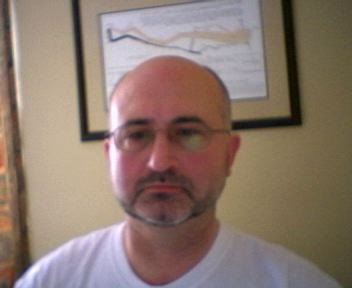
Anyhoo. Try this yourself - it's surprisingly difficult to remember exactly what you look like. I did mine from memory, then took this snapshot with my web-cam to compare. I'm not happy with the nose, but they didn't have anything quite the right size or big enough.

Friday, October 28, 2005

Now I need a vodka and tonic, too

OpinionJournal - Peggy Noonan: "Do people fear the wheels are coming off the trolley? Is this fear widespread? A few weeks ago I was reading Christopher Lawford's lovely, candid and affectionate remembrance of growing up in a particular time and place with a particular family, the Kennedys, circa roughly 1950-2000. It's called 'Symptoms of Withdrawal.' At the end he quotes his Uncle Teddy. Christopher, Ted Kennedy and a few family members had gathered one night and were having a drink in Mr. Lawford's mother's apartment in Manhattan. Teddy was expansive. If he hadn't gone into politics he would have been an opera singer, he told them, and visited small Italian villages and had pasta every day for lunch. 'Singing at la Scala in front of three thousand people throwing flowers at you. Then going out for dinner and having more pasta.' Everyone was laughing. Then, writes Mr. Lawford, Teddy 'took a long, slow gulp of his vodka and tonic, thought for a moment, and changed tack. 'I'm glad I'm not going to be around when you guys are my age.' I asked him why, and he said, 'Because when you guys are my age, the whole thing is going to fall apart.

Mr. Lawford continued, 'The statement hung there, suspended in the realm of 'maybe we shouldn't go there.' Nobody wanted to touch it. After a few moments of heavy silence, my uncle moved on.'
Lawford thought his uncle might be referring to their family--that it might 'fall apart.' But reading, one gets the strong impression Teddy Kennedy was not talking about his family but about the whole ball of wax, the impossible nature of everything, the realities so daunting it seems the very system is off the tracks.

And--forgive me--I thought: If even Teddy knows. . ."

Man, the wheels have been off the trolley for 50 years. We're still just flying along, over the side of the cliff, waiting for gravity to remember that it applies to us, too.

Teddy, pour me another drink. Make this one a double.

Tuesday, October 25, 2005

Still Haven't Found What I'm Looking For

This message was composed with the new Flock browser.

I'm always looking for the easiest, most natural blogging experience. I've tried stand alone composition and management, but I hate launching another app. I've tried doing it through email, but that's not reliable. And I've had web interfaces fail on me too many times.

So, what of Flock? (or what the flock?) Too early to tell. we shall see.

My Kingdom For A Floppy!

My, how times change!

My daughter has a project at school. She'd like to work on the project there and also at home.

"Fine," I say. "Email it to yourself."

"I can't email from the lab computers. I can put it on a floppy."

But we use Macs at home and Macs haven't had disc or floppy drives for YEARS. So today I went out, grumbling, and bought a "flash" drive, which is nothing more than a hunk o'memory on a USB dongle. 512 meg. Cost me $42, but I'll get $10 back after rebate. So now Jennifer can transport files between home and school.

And yes, I'm still grumbling. I carry 60 freak'n GIGABYTES in my pocket with over 10,000 songs, 6,000 digital pictures, all of my personal files, and still have over 3 gig left.

What do I want? I want a 100 terabyte drive in my watch with everywhere high speed access to the net. No more grumbling then, no sir. Oh, and my Virtual Light sunglasses, please?


"Virtual Light" (William Gibson)


,

Monday, October 24, 2005

Do I hear $2,000?


My blog is worth $1,129.08.
How much is your blog worth?

Not Captain Tripps, Just a Cold

Diane fought the sniffles and a sore throat for nearly two weeks. Now it's mine. My head is foggy and I can't breath.

In my present state, I can't remember if I published this old short story, but sensing a theme, here it is: Common Cold.

"Achoo!"

"Knock it off, Bruce. You don't have a cold." Littermeir peeked over the cubicle, shaking his greasy head. "Just cut it out, will ya? You didn't have a cold last month, not last week, and not today."

"I had the flu last week."

"You did not. Nobody's had any of those things for over twenty years. I bet even you've never been sick. Now just cut it out." Littermeir hoisted himself up and threw his arms over the top of the divider.

"Don't lean on that, you'll break it." He looked up at the beefy arms and bulbous face that towered over him. He practiced a sniffle. "I had a cold once."

Littermeir snuffled in reply.

"I caught a cold when I was eight and had to stay home from school for two days. I think I'm catching something this time. I'm almost sure that my ears are plugging up."

"My God, it's probably cholera. Wasn't that one of those childhood diseases?"

Bruce shook his head weakly at him. "No, it wasn't. I just think I'm catching a cold."

"Isn't it about your nap time?" Littermeir reached down behind the divider and produced a single, white powdered donut, which he leered at before popping it whole into his mouth. "Just take a little nap and you'll feel better," he said with a mouth full of yellow and white, then he laughed in clouds of crumbs and dust. He flapped a hand at Bruce as he thumped down from his perch.

Bruce felt his forehead and cheeks. He was flushed with embarrassment, not fever. He'd just moved to this cubicle from his comfortable one in the corner last week when Littermeir had peeked over the divider and had caught him staring at his terminal with his eyes closed, his cheek resting in his hand. The worst part was that it was true. This job was so boring and undirected that he regularly took naps and went to great pains never to be caught. It was his only sport. He opened the center desk drawer and plucked out a small mirror, then held it close to his face. With the fingers of his right hand he pulled down his lower lids. The whites of his eyes were clear and white. "Damn." Open mouth, tongue extended--pink, even flesh everywhere. He put the mirror away, then pinched one nostril closed, inhaled, then the other nostril. His breathing was unobstructed. He rested his chin in his palm and stared at his terminal and with his free hand, reached out to the keyboard and punched random keys. Tomorrow he'd bring in his Merck Manual of Disease and Diagnosis. Maybe during his forty-five minutes of lunch he'd flip through the pages of the tattered volume and find something that he could still catch.

Three o'clock. Bruce straightened in his chair and looked across and up the narrow aisle to the woman who was furiously working there. She would, in moments, answer the first of at least fourteen telephone calls. The first would be her daughter checking in from school. That would be followed by calls of what to wear, when to do home work, what to wear, and so on throughout the remainder of the afternoon. This was the best part of the day. Bruce tried to imagine the other side of the conversations, but that ended up boring him too. A couple of aisles over he could hear two other employees arguing in increasingly louder tones. He stood, pretending to stretch and catch a peek of who it was, but when they both stopped their arguing and stared at him he changed his stretch into reaching for a manual on a top shelf. He grabbed at random and sat back down. Flipping it open he discovered it to be terribly out of date, probably from the previous inhabitant of this cubicle. He flung open a lower desk drawer to drop it inside, but it was already overflowing with out-of-date materials. He rolled back from the desk and dropped the manual in the waste can, then began pulling thick memos, stapled, clipped, and folded documents, and dropped them one at a time into the can with only cursory glances. He tossed out hanging folders, envelopes, and then in the back, pulled free a heavy plastic bag zippered at the top. He moved aside his keyboard and papers and set it unopened on his desktop to examine its contents without disturbing them, in case it held something important or illegal. Instead, Bruce saw with growing wonder and nostalgia the packages, bottles and containers that would push aside his boredom.

The bag was full of over-the-counter cold remedies.

Bruce smiled broadly. He laid the zippered bag on its side and carefully shook it so the contents were evenly displayed. He pressed his face close to the murky plastic so he could see the shapes of elixirs and unguents that would offer him relief, if only he were sick! He twisted the bag around, pulled it close to his nose, and then gingerly peeled apart the seal. A short sniff brought the long missed hint of dust and the bitter-sharp tingle of acetylsalicylic acid. Aspirin! He reached in and carefully brought out a little tin and followed the instructions to, "Press red dots with both thumbs". The lid popped back to reveal the crumbling white tablets. His grin broadened. He wet the tip of his finger to collect a few grains and place them on his tongue. He tasted the healing tartness. He closed his eyes to savor its astringent dryness. Had he dared, he would have crushed a whole tablet between his teeth. He considered it a long while, but thinking it over, decided it was stupid, foolish to take a drug that could be, well, who knows how old. Oh! If only it were orange too! He remembered being bundled up in bed, hot cocoa on his nightstand, and the tiny orange pills his mother had him chew. He had loved the way the tiny, hard pills snapped and crunched between his teeth, lingered on his molars. He snapped the lid closed before he was overcome with temptation.

What next? A bottle of liquid cold medicine that smelled strongly of alcohol, an unopened box that revealed some sort of nasal spray. He read the directions, and then removed the cap. He cautiously sniffed, but inhaled a fine mist of the decongestant. It startled him, but within seconds he could feel the membranes shrink and move within his passages. Suddenly frightened, he scooped the discovered items into his top desk drawer and hurried to the restroom, cupped his hands under the faucet, filled them with water, and sucked it into his nose. He coughed and choked, then did it twice again. When he looked up in the mirror it seemed as if he were in a cold sweat. He grinned hugely. "Oh, you look sick." he said.

He returned cautiously to his desk, but no one took notice of him. At first, he went back to the report he had been working on that morning, but all he could think of was what was in his desk drawer. He cracked the drawer open and slid out an individually wrapped packet of capsules. He pushed one out through the foil backing and fingered the thin gelatin case that enclosed the multi-colored balls. He spread a sheet of clean paper on his desk and creased it to form a trough, then twisted the capsule, pulling the halves apart. He poured the tiny pieces out on the paper and it rustled gently. He stirred the pieces with the end of a red pencil. "Too bad I'm not sick," he said with regret.

The rest of the package contained a small box of paper napkins, some sort of eye drops, a gelatinous blue mask, and several hard candies that smelled of honey and menthol. The last item was a cobalt blue bottle, half full of a thick, greasy stuff that let off such a strong odor that he quickly recapped it, then stuck it back in the bag and resealed it also. What a treasure! What a joy it would be to have a cold.

* * * *

Bruce remembered the day, in the vagaries of his youth, when they released the vector. After the years of testing and argument they announced the day and hour when the bulk of human suffering would end. His parents had graciously allowed him to stay up for the midnight television broadcast, then threatened to send him to bed for fighting with his little sister. Someone read a speech, and just before he dozed off, they released the balloons.


The leading causes of death today are:

1. Suicide

2. Domestic Disputes

3. Household Accidents

Bruce wanted to add boredom to the list, but acquiesced that it probably fell under category one.

* * * * *

At home that night, Bruce dreamed.

He was swaddled in blankets and wore a huge sweater that wrapped around and about him. His dream self tried to stand, but gently swooned and felt the room slowly move. When he closed his eyes and the entire room accelerated with him at its center, but it stopped jarringly when he forced his eyes open again. He dabbed his nose with tissues. They piled in mounds about him. Suddenly, he felt the sensation growing within him; the odd, high feeling in the front of his nose, the small catch of breath, the anticipation was over! He sneezed. He relaxed back to the womb of pillows with a sigh that released the burden of years. Bruce stirred and woke, but the smile of the passing dream took him quickly, easily back to sleep. Maybe tomorrow.

* * * *

He just couldn't concentrate. Today, of all days, he had many important things to do, some of them actually interesting, but he couldn't find a place to start. His hands kept slipping off the keyboard and down to the desk drawer. Twice he found his hand inside it, turning the little tin box of tablets over and over. Each time he'd close the drawer, re-straighten his desk, and turn back to the bit of work in front of him.

He looked for things to do. He called his home phone number to see if he had any messages on his answering machine. He did not. He dialed for time and temperature to check his watch and desk clock, then dialed again to make sure it was accurate, but the urge to peek and explore did not subside. Finally, he pulled the entire bag from the drawer and tossed it in his waste can, then thrust away from the desk and headed for the restroom. He marched briskly down the aisle and reached out to push open the door. It moved away from his hand and he fell forward, into the pillowy softness of Littermeir on the other side. He looked up at him as he tried to squeeze by. Littermeir looked as if he had held his head under a faucet, then combed his hair with his fingers. He held an open and partially eaten candy bar in fingers that themselves had been nibbled and eaten down to slivers of nails and puffy, wrinkled finger tips. Littermeir grinned down at him, huge and unsafe, now freed from the cubical divider that normally protected him.

"What is it today? I think you've made at least four trips down here."

"Nothing. Excuse me."

He didn't move from the partially opened door.

"Diarrhea? Are we pretending to have diarrhea today? You're really pitiful, Brucey, really pitiful."

Bruce pushed past, avoiding contact. Once, he had stood at the bus stop out front and Littermeir pressed up close to his side in the crowd. When Bruce had reached down, he accidentally placed his hand in Littermeir's coat pocket, not his own. It was lined with moist crumbs, the remains of a dying cookie. He'd pulled back quickly, but the revulsion and shock of the moment made him want to keep clean, open spaces between them. The door closed slowly with Littermeir still standing there, grinning in at him. He hurried to a back stall and shut the door, then leaned his head against the cool surface.

Standing there, he discovered a strange, hard lump in his pocket. He felt it through the fabric of his trousers. Ah, of course, he thought. Sometime during the fidgeting at his desk he had placed the little blue bottle of ointment in his pocket. He pulled it out and popped the lid, just enough to catch the aroma of menthol. He inhaled deeply and decided with no hesitation. No one was here. He stepped out of the stall and up to the mirror, threw his tie over his left shoulder and opened the top buttons of his shirt. He dipped two fingers into the opaque, sticky-thick goo and pulled out a mobile lump, bringing it to his chest. He rubbed it in circles, matting the black hairs into tight, flat curls. The rising vapors made his eyes water. The last bit he worked into each nostril and smeared across his upper lip, as directed. It was exhilarating. His grin widened, making his face feel tight and hot. The reflection looked manic and dangerous. "This is good," he said without dropping his rictal smile, "if I can't get sick, I'll get insane."

He let the smile fade and the muscles in his cheeks relax. The fumes were making him dizzy, tired. He reached up to rub his eyes, instantly stinging them with the residue of the ointment. Instinctively, he cupped his hands under the faucet and brought the captured water towards his face, but then he stopped and let it drain away. He pressed close to the mirror, holding the basin on both sides and slowly forced his eyes open, waiting for his vision to clear. They were shot with red. He shook his head at himself, then bent and washed his face clean.

Bruce dried himself as best as he could with the blower, and then returned to the stall. He thought for a moment before lowering his trousers. It was impossible to sit comfortably on a toilet with your pants up. That, and it would look strange to anyone walking in. But this was too strange for Bruce, sitting with his pants around his ankles, his shirt sticking to his chest, his eyes watering. He could barely catch his breath. He pulled free several turns of toilet paper and reached up under his shirt to wipe away what he could. That seemed to just move it around. He stood, rearranged himself, flushed for cover, and exited without rewashing his hands.

On the way back to his desk he firmly resolved to complete a memo and to append the weekly report, and . . . he walked past his cubicle, his stride lengthening. He passed his supervisor's desk. She took no notice of him, but the medicated aroma settled on her in his wake. She peeked around the corner as he forsook the elevator and pushed open the door to the stairs.

Bruce took the stairs two at a time. His hand slid down the rail and propelled him in tight turns down the well. He burst into the lobby, past the reception desk, then out into the morning sunlight. There he slowed, then stopped as he reached the curb. The exertion of his escape made his heart pound within his chest. For a moment he stood there, at the stop, by the bench. He stood in this exact same spot every day, but he had never been out here mid-morning. He stuck a finger behind his tie and into his shirt to feel the greasy mat of hair and shirt. He pulled it out and it was coated with the pungent ointment. He wiped it on the concrete bench. 10:30. He sat on the bench and considered what he might do next. The answer came immediately: Go back.

With that settled, he sat a moment more, waiting for his second wind. He didn't know how long that might take, since he had never pushed past his first one. "I'm not strong enough to stand being sick," he muttered by himself. His eyes hurt, he was sticky and smelly, and who were these people? Here it is, mid-morning, and the street and sidewalk is full of people. The strangeness of being away from his desk and out caused Bruce to scan the faces. The injustice of their freedom agitated him. Why weren't they working? What were they all doing out here? "If I have to work, everybody has to work." The reverse did not occur to him. Surely they weren't all runaways like him. Even now, within minutes of his flight, the guilt of his absence grew. He reluctantly stood, turned towards the office, and cursed the happy multitude behind him.

Back at his desk, a grimy candy bar wrapper sat on the floor near his trashcan. He cautiously picked it up to drop it in . . . the can was unexpectedly empty . . . the bag of medicines was gone. He listened. Soft, unpleasant sounds came from over the divider. He peeked. Littermeir was cradling his head in his hands and moaning. In front of him, on his desk, were the cellophane wrappers of medicated candies and a little plastic cup/lid with a residue of green liquid. The bottle lay on its side, empty. Bruce gasped, then laughed sharply. Littermeir turned to look at him. His face was pale with panic and pain, and . . . He hiccupped slightly, then turned and threw up on the floor. Bruce stared in disbelief as Littermeir leaned forward and rolled from his chair. He lay on his side across the aisle. Faces peered above and around dividers.

Bruce ran to the end of the aisle and back to where Littermeir lay.

"What did you do?" he whispered to him. Littermeir looked up at him, then retched and threw up again.

Bruce stepped past him, lifted the empty plastic bag from the corner of the desk, and quickly swept the empty wrappers and remaining medications into it. He reached over the divider to his own desk and tossed it back and under his desk. He turned back to kneel beside Littermeir. After a moment, the supervisor strode down the aisle and looked down at them both: Bruce cradling Littermeir's head in his lap.

"What's going on here?" she demanded.

Bruce looked up at her and with a grin of triumph said, "He's sick!"

Friday, October 21, 2005

Another great idea


But what will we have floating over our heads when we come up with the next one?

Quantum dots that produce white light could be the light bulb's successor | Science Blog: "Take an LED that produces intense, blue light. Coat it with a thin layer of special microscopic beads called quantum dots. And you have what could become the successor to the venerable light bulb."

LEDs and their cousins, OLEDs, have enormous potential in changing the way we light up the world as well as use energy. And I certainly look forward to at least one Saturday when I'm not replacing a light bulb somewhere in the house.

But could someone tell me where I could get an LED conversion kit for my trusty 3 D cell Maglite flashlight? I love the thing. Sure, I could get a small, light, palm-sized LED flashlight that produced more light, but the thing is more a weapon than a light source and it's damn comforting when padding around the house at night trying to figure out what made that strange noise.

Tuesday, October 18, 2005

Yet Another Star Trek Invention Comes To Pass


Even the silliest sounding stuff they make up in Star Trek ends up being invented.

Air Force testing new transparent armor | Science Blog: "ALONtm is a ceramic compound with a high compressive strength and durability. When polished, it is the premier transparent armor for use in armored vehicles, said. 1st Lt. Joseph La Monica, transparent armor sub-direction lead
'The substance itself is light years ahead of glass,' he said, adding that it offers 'higher performance and lighter weight.'"

Transparent Aluminum. Christ Almighty.

Armor, sure, yes, useful for that. But imagine what else you could build out of super strong, light, transparent material you can mold.

Scratch proof iPods, of course.

, ,

Bush Administration Self Destructs in 5, 4, 3 . . .

Simply amazing.

I look at the headlines and shake my head in wonder. The Plame Affair, so long swept under the rug, might actually bring down Rove, and perhaps the Dark Lord himself, the Vice President. Bush's approval ratings are dismal. The war in Iraq has gone so, so bad (though not as bad as I feared. Yet.) And the news for them just keeps getting worse.

And what really makes me scratch my head is that they've done it to themselves. The opposition, the generally clueless Democrats, haven't figured out how to oppose. The press has been, until lately, in full lapdog mode.

So, let's ask, "what if" a bit. What if Cheney was forced to resign, Rove and Libby were indicted and resign as well. Bush is cut of from his most trusted advisors. What then?

Hell, we've been there before. How long until some more "you'll have to trust me on this" evidence comes out that Iran is plotting something nefarious against us and we'll just have to invade.

God help us if things go really badly for Bush and they start a shouting match with China.

OK, enough of that.

Here's what it gets down to. Someone in the Bush administration outed an active duty undercover CIA agent for political gain. Frankly, I'd call it treason and haul Karl Rove and Scooter Libby and the VP himself out back of the White House and shoot them. The President deserves impeachment for allowing it to go unanswered for two years. If he wasn't involved he could have called the VP in on day one, demanded to know the truth, and fired all of them on the spot. But he didn't. If he knew, that's conspiracy. If he didn't know, that's incompetence.

And shame on the special prosecutor and the press for not bringing this to a close well before the last election.

Monday, October 17, 2005

Looks Like Karl Has Won A Major Award


Karl Rove's Garage Proves to Be Typical: "* A rather large wood crate marked 'FRAGILE' and painted with arrows indicating which way is up. On top of the crate, two coolers."

And it's pronounced "Frag-eee-lay".